The impossibility of fully knowing loved ones or oneself
Just One LookThe impossibility of fully knowing loved ones or oneself is a central insight in Grace Lawson’s return to painting after Jack Lawson’s death. The idea is not presented as a puzzle with a final solution: as Grace tries to paint Jack, she recognizes that love and intimacy do not amount to complete knowledge of another person, or even of oneself.
The Claim and Its Limits
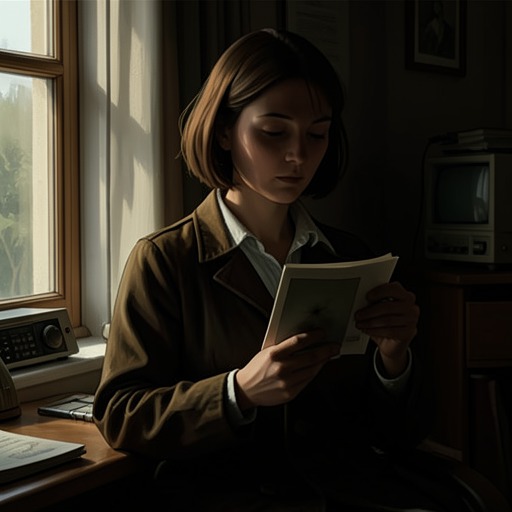
Grace’s thought emerges as she picks up a brush and tries to paint her husband. She distinguishes the person she wants to represent from the names and identities bound up in the revelations about his past: she wants to paint Jack, not John Lawson or Shane Alworth. The distinction gives the abstract idea a concrete pressure. The person closest to her remains subject to facts and identities she could not fully know, yet she does not reduce him to those disclosures.
Her reflection widens from the limits of knowing a loved one to the limits of self-knowledge. The uncertainty is shared rather than assigned only to Jack: Grace considers that people may not understand everything about themselves, either. The thought leaves room for hidden complexity without claiming that every secret has been exposed or that the past can be made wholly legible.
Painting as Recognition
Grace expects her attempt to paint Jack to come out confused, but the brush moves with assurance across the canvas. That contrast matters: understanding does not arrive as a complete explanation of who Jack was. Instead, the act of painting allows Grace to hold the person she loved in view without collapsing him into the competing identities surrounding his history.
The painting unfolds alongside her listening to Scott Duncan’s cassette. When the recording ends, Grace rewinds it and starts again, working in a frenzy as tears run down her cheeks. The scene joins repeated listening and renewed painting: neither erases uncertainty, but both give her a way to remain with Jack and with her own response to what she has learned.
Return to Ordinary Life
The scene does not turn private grief into an escape from daily responsibility. Grace glances at the clock, remembers that school will soon let out, and has to collect the children; Emma has piano and Max has soccer practice. She takes her purse and locks the studio door. The ordinary schedule arrives beside the grief, not as its resolution but as the next demand on her attention. The concept therefore closes not with certainty about Jack or herself, but with Grace carrying what she cannot fully know back into the continuing routines of family life.